
AI's Lifesaving Leap: From Universal Vaccines to Novel Antibiotics
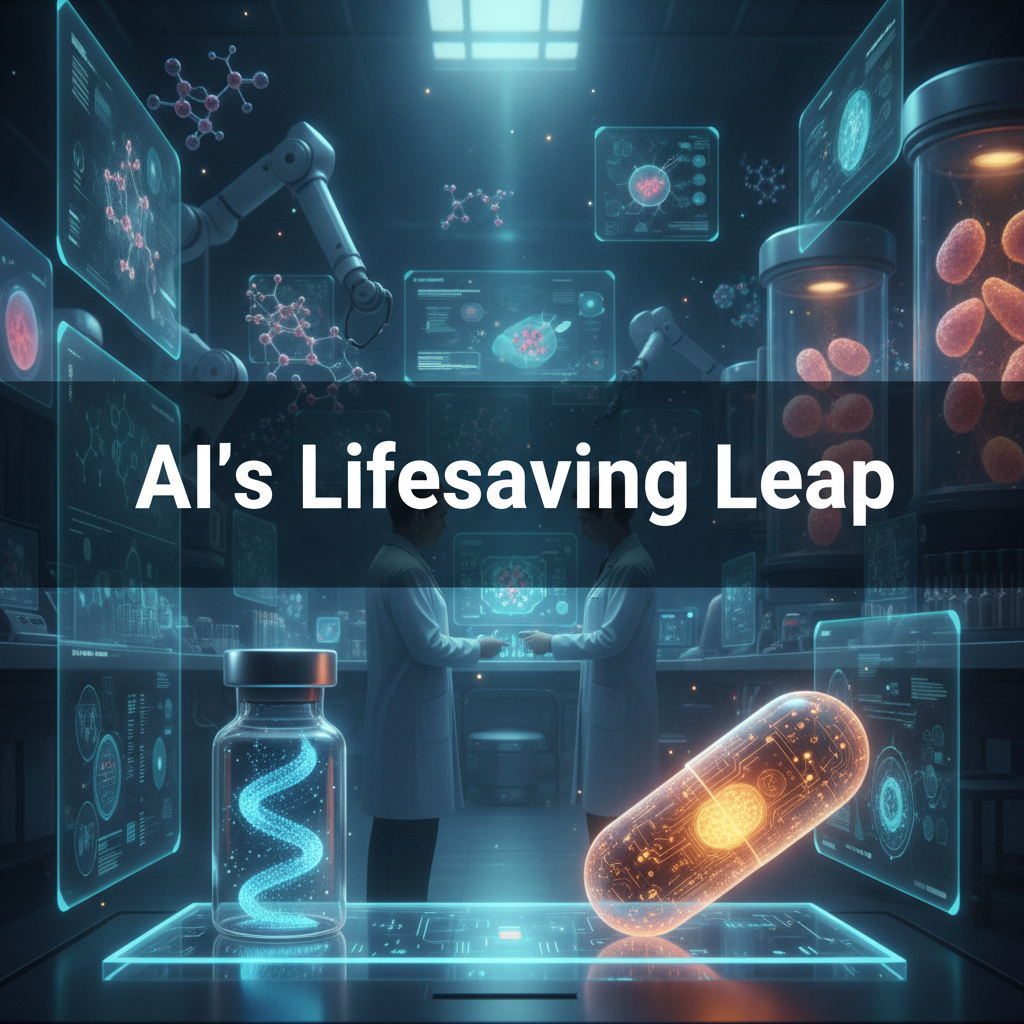
The Dawn of a New Era in Medicine, Powered by AI
Artificial Intelligence continues to redefine the boundaries of what's possible, and nowhere is its impact more profoundly felt than in the realm of medicine. While the discourse often circles around generative AI's creative capacities or autonomous agents streamlining industries, some of the most groundbreaking advancements are quietly reshaping global health. Recent breakthroughs, from AI-designed universal vaccines successfully entering human trials to the discovery of potent new antibiotics, herald a future where disease prevention and treatment are revolutionized by intelligent machines.
Pioneering Prevention: AI-Designed Universal Vaccines
Imagine a single vaccine capable of protecting against a multitude of viral threats, or even rapidly adapting to emerging pathogens. This once-futuristic concept is now becoming a reality, thanks to AI. Researchers at the University of Cambridge recently announced a monumental achievement: an AI-designed universal vaccine has successfully completed its initial human trials. This marks the first time a vaccine's key component was entirely conceived by artificial intelligence and subsequently tested in humans. This breakthrough demonstrates AI's unparalleled capacity to develop fundamentally new vaccine types, holding the promise of safeguarding against diverse viruses and potentially preventing future pandemics. The speed and precision with which AI can analyze complex biological data, predict protein structures, and model immune responses are compressing development timelines that traditionally span decades, offering unprecedented hope for global health security.
Battling the Bugs: AI's Arsenal Against Antibiotic Resistance
Beyond prevention, AI is also fortifying our defenses against existing threats, particularly the growing crisis of antibiotic resistance. A compelling example is the AI-driven discovery of a completely new antibiotic named 'hallison'. This novel compound has shown remarkable efficacy in laboratory tests, successfully eradicating dangerous drug-resistant bacteria, including strains that typically shrug off most conventional antibiotics. In experiments conducted on mice, hallison cleared severe infections within approximately 24 hours, and critically, the bacteria did not rapidly develop resistance—a common hurdle with traditional antibiotics. This feat underscores AI's ability to sift through vast chemical libraries and biological pathways, identifying promising candidates that human researchers might overlook. Such discoveries are vital in the ongoing fight against superbugs, offering new hope in an era where effective antibiotics are becoming increasingly scarce.
A Broader Spectrum of AI in Health Innovation
The impact of AI in healthcare extends far beyond these remarkable vaccine and antibiotic discoveries. Across various research institutions, AI is being leveraged to uncover hidden disease mechanisms, such as identifying a gene previously thought to be merely a biomarker for Alzheimer's disease as an actual cause. It's sharpening breast cancer treatment plans by developing advanced deep-learning techniques that reduce radiation errors. Furthermore, AI is enabling non-invasive monitoring of heart activity with remarkable accuracy and even accelerating climate forecasts, demonstrating its versatility in addressing interconnected global challenges. These advancements collectively paint a picture of AI not just as a tool, but as a transformative partner in scientific inquiry and practical application, pushing the boundaries of what's medically achievable.
Navigating the Future: Challenges and Responsible Deployment
While the potential benefits are immense, the rapid pace of AI development in medicine also necessitates careful consideration of ethical implications, governance, and responsible deployment. The UN's first global assessment of AI highlights that capabilities are outpacing scientific understanding and governmental adaptation, warning of potential catastrophic harm if safeguards don't keep pace. Ensuring equitable access to these AI-powered medical innovations, establishing robust regulatory frameworks, and maintaining human oversight remain critical challenges. However, with continued collaboration between AI developers, medical professionals, policymakers, and ethicists, the trajectory suggests a future where AI significantly enhances human well-being and extends healthy lifespans globally.
Sources & References
- Nine Breakthroughs Made Possible by AI - UC San Diego Today
- The Latest AI News and Breakthroughs That Matter Most - Crescendo.ai
- Top 15 New Inventions MADE By AI That Shouldn't Be Possible - YouTube
- 'The science is here': UN chief welcomes first global AI assessment | UN News
- AI explained: Why the world needs to act now | UN News
Discussion (0)
Add a Comment