
Beyond the Headset: Is Glasses-Free 3D the Future VR Needed?
The VR Headset Boom: A Peak or a Plateau?
For years, Virtual Reality (VR) has promised to transport us to new worlds, offering unparalleled immersion. Recent weeks, particularly with the flurry of announcements from the Summer VR Games Showcase and UploadVR Summer Showcase, have reinforced the vibrant development scene, bringing forth exciting new co-op shooters like Breachers: Outbreak and Payday: Aces High, and innovative social experiences like Cozy Worlds Together across Meta Quest, PSVR2, and PC VR platforms. Yet, despite this seemingly thriving ecosystem of content, a recent report from DEVELOP3D on June 30, 2026, poses a provocative question: "Has the VR headset boom ended?".
The "Trough of Disillusionment" for Head-Mounted Displays
The article points to a significant 17% year-on-year drop in global VR headset shipments in Q1 2026, alongside Meta's Reality Labs layoffs, suggesting that VR technology has once again entered what Gartner analysts term "the trough of disillusionment". The core argument is that while the *idea* of immersive experiences remains compelling, the primary delivery system—the head-mounted display—introduces too much friction. Issues like cybersickness (affecting 40% to 70% of users), neck strain, headset fatigue, and social isolation are cited as major barriers to mainstream adoption. As the DEVELOP3D piece eloquently puts it, "once the novelty wore off, most people simply didn't want a heavy, sweaty device strapped to their face, whether it cost $300 or $3,000."
Enter Glasses-Free 3D: A Paradigm Shift?
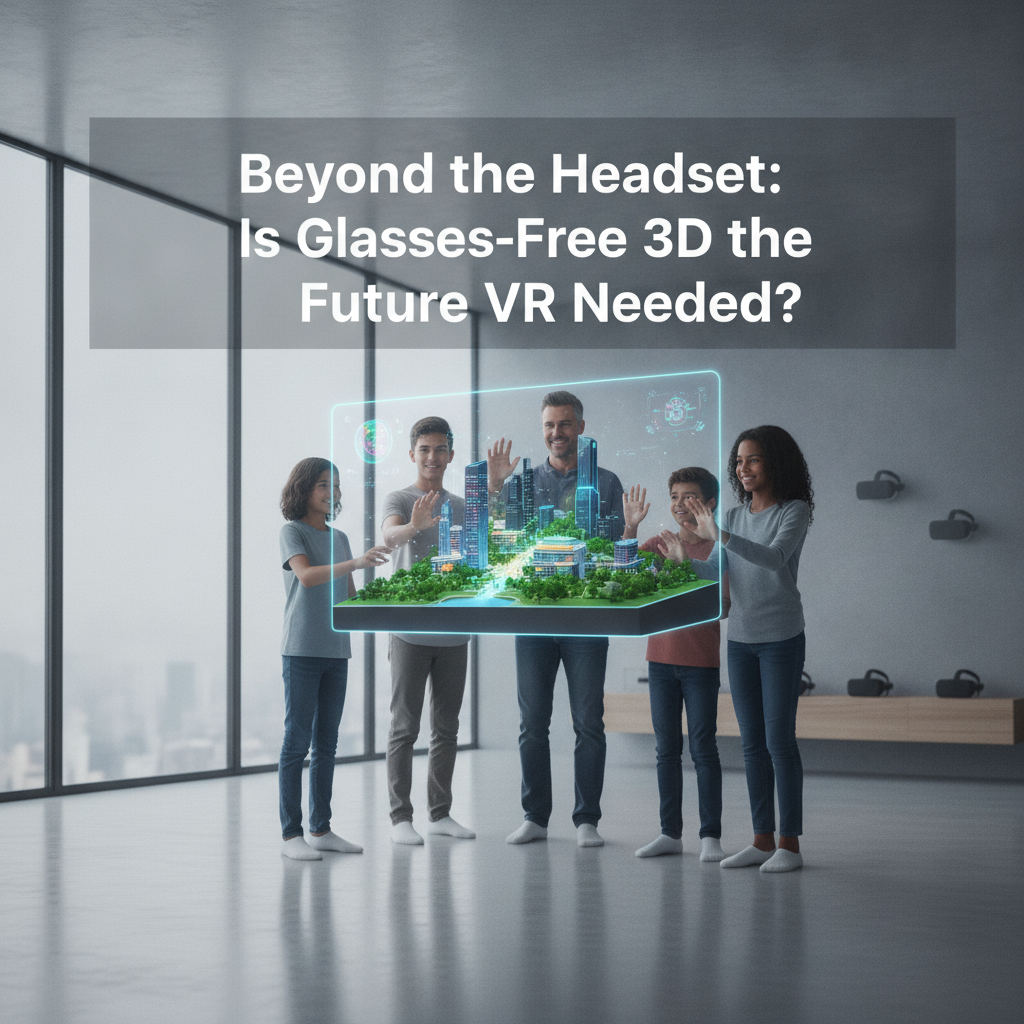
This critical perspective isn't an indictment of VR itself, but rather of the headset as its exclusive gateway. The article argues that "It isn't VR that has failed, but rather, the headset experiment." Instead, it champions the rise of glasses-free 3D digital displays as the "next natural evolution of visual communication". This technology aims to deliver immersive experiences without demanding users to adapt to the machine. By eliminating the need for a headset, content can exist anywhere a 3D display is deployed, fostering shared, social, and intuitive experiences that align more naturally with human perception. Imagine collaborating around digital twins in real-time or engaging students without isolating them behind individual screens. This vision promises to unlock the true potential of immersion, making adoption automatic rather than a chore.
What This Means for the Future of Immersion
While VR gaming continues to innovate with advanced haptic feedback and eye-tracking, and AI integration promises more dynamic virtual worlds, the conversation about glasses-free 3D introduces a fascinating alternative pathway for immersive technology. It suggests that the industry, after years of focusing on individual headset experiences, might be ready to shift towards a more communal, accessible, and physiologically aligned approach to 3D interaction. The success of platforms like Android XR, with its developer tooling and pending consumer glasses, and Valve's anticipated Steam Frame, still point to a future with head-mounted devices. However, the compelling case for glasses-free 3D reminds us that the quest for immersive experiences is far from over, and its ultimate form may look very different from what we currently imagine.
Sources & References
- Everything Announced at the Summer 2026 VR Games Showcase
- Top 10 VR Trends of 2026: Future of Virtual Reality - HQSoftware
- This Week in VR: A Stacked Game Showcase, Steam Machine Pricing, and Android XR's Midterm Grade | VR.org
- New VR Games & Releases June 2026: Meta Quest, PC VR, PlayStation VR2, & More
- VR Games Showcase June 2026 Recap: Biggest Reveals! - YouTube
- Has the VR headset boom boom ended? - DEVELOP3D
- 11 NEW VR Games Coming Up In June 2026 For Meta Quest 3, PSVR2, PCVR & Pico!
- New VR Games & Releases July 2026: Quest, PS VR2, PC VR & More - UploadVR
- The UploadVR Summer Showcase Delivered 30+ Reveals. Here Are the Ones That Actually Matter. | VR.org
- The VR Games Showcase Summer 2026 just gave me fresh reasons to pick up HEAVILY discounted Meta Quest gift cards on Prime Day | Android Central
- VR Games Showcase June 2026 Recap: Every Major Game Announcement - Duuro Plays
- June 2026 VR Games: The Good, the Bloat, and the Baffling
- 2026 Trends To Watch: Physical AI, Spatial Computing And The VR Boom - Forbes
Discussion (0)
Add a Comment