
Beyond the Screen: How Smart AR Glasses and AI are Ushering in the Era of Spatial Computing
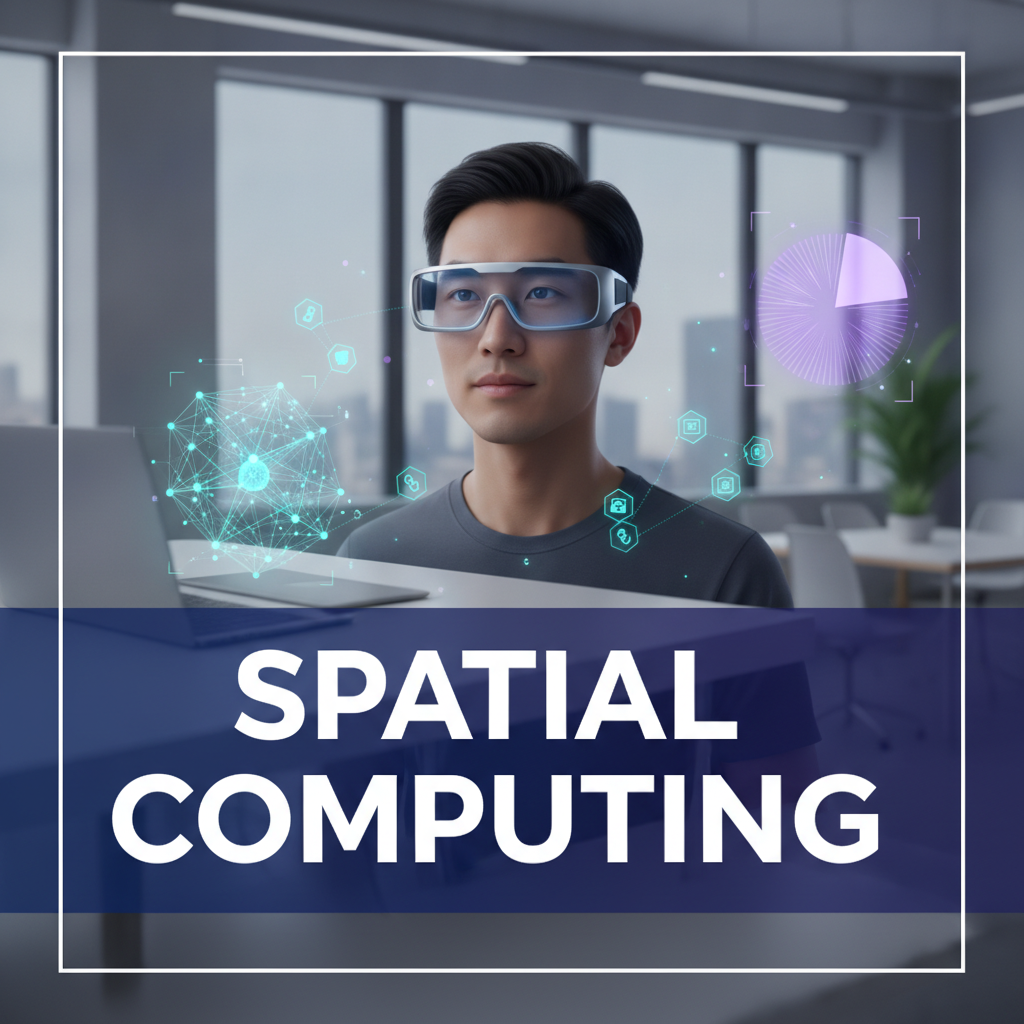
Augmented Reality's Defining Moment: The Dawn of Spatial Computing
Remember when Augmented Reality (AR) was primarily about quirky filters on social media or catching digital creatures in parks? While those playful applications still exist, AR in 2026 has matured dramatically, moving beyond mere novelty to become a foundational layer of our digital lives. We are now standing at the precipice of the spatial computing era, where digital information seamlessly blends with our physical world, driven by advanced AR glasses and intelligent AI. This isn't just an upgrade; it's a paradigm shift in how we interact with technology and our environment.
The Rise of Intelligent AR Eyewear: Your Next Digital Interface
The most tangible evidence of this shift lies in the rapid evolution of AR hardware. Forget bulky headsets; 2026 marks the "breakout growth phase" for sleek, high-performance AR glasses that are quickly shedding their experimental image. Companies like Samsung and Meta are at the forefront, with offerings like the Samsung Galaxy Glasses and the Meta Ray-Ban Display, both integrating advanced AI and promising to be more than just accessories – they're vying to become the primary way we interact with the digital world, potentially replacing our smartphones. The Galaxy Glasses, powered by Android XR and Gemini AI, aim for seamless integration with existing devices, offering an AI-driven interface that anticipates user needs. Meanwhile, Meta's Ray-Ban Display emphasizes style and offers best-in-class AI voice assistance and real-time multimodal translation. These devices, alongside others like XREAL One Pro, are designed to deliver immersive experiences with features like wide fields of view, high-resolution displays, and sophisticated spatial tracking, enabling digital content to truly inhabit our physical space.
Transforming Enterprise with Spatial Collaboration and Efficiency
Beyond the consumer realm, enterprise AR has not just arrived; it's booming. Businesses are leveraging spatial computing to revolutionize workflows, enhance training, and enable unprecedented levels of collaboration. Microsoft Mesh, for instance, is already transforming how distributed teams meet in shared 3D spaces, complete with photorealistic avatars and spatial audio, leading to significant improvements in decision-making speed and efficiency. From complex design reviews in manufacturing to remote assistance for field service technicians, AR overlays crucial information onto real-world objects, increasing accuracy and reducing downtime. The integration of AR with digital twin technology and IoT data is creating an ecosystem that connects physical and digital environments for measurable business results across manufacturing, healthcare, retail, and education.
Everyday AR: Enhancing Life from Shopping to Navigation
The impact of AR is also increasingly felt in our daily lives. In retail, virtual try-ons for fashion and home décor apps like IKEA Place and ASOS are boosting consumer confidence and reducing return rates by allowing customers to visualize products in their own space or on themselves. Beyond shopping, AR is being embedded in everyday digital behaviors such as social media content creation, navigation, and even education, where students can interact with 3D models of planets or historical events right in their classrooms. This enhanced consumer engagement, driven by AI-powered personalization, is making AR an indispensable tool for brands and a valuable aid for users seeking more informed and interactive experiences.
Navigating the Future: Interoperability, Accessibility, and Ethics
As AR continues its rapid ascent, the road ahead involves addressing key challenges to ensure its widespread and equitable adoption. Interoperability, allowing seamless data sharing and experiences across different platforms and devices, remains a crucial area of development. Ensuring accessibility for users with disabilities and prioritizing privacy-first design with transparent data protection policies are also paramount for building trust and fostering an inclusive spatial computing environment. The convergence of AI, AR, and spatial computing is not just about new gadgets; it's about redefining human-digital interaction and creating a more intelligent, contextual, and interactive world. The future of augmented reality is not about replacing reality, but about profoundly enhancing it.
Sources & References
- Onirix Blog
- Next Reality - Augmented Reality News
- Blippar Blog
- 40 Best Augmented Reality Blogs to Follow in 2026 (AR Blogs) - FeedSpot
- 7 Innovative Cases of Augmented Reality Used in Enterprise | Helmes
- AR Insider: Augmented Reality News & Knowledge
- Extended Reality News - XR Today
- Deployments Of Enterprise Augmented Reality (AR) - Rock Paper Reality
- 15 Ideas for AR App Development (2026) - Augmented Reality Ideas - Elegant Media
- Top Augmented Reality Solutions Transforming Businesses in 2026 - Frame Sixty
- 13 Augmented Reality Technology Trends to Watch in 2026 - MobiDev
- The Best Augmented Reality Glasses in 2026 | by echo3D - Medium
- AR/VR Trends 2026 - Innowise
- Introducing AR Enterprise Services - Snap Newsroom
- 7 Enterprise Companies Using AR to Sell More - Threekit
- Consumer Use of Augmented Reality Is Influencing Purchases - Destination CRM
- How Augmented Reality Is Redefining Consumer Expectations Across Industries - Forbes
- Augmented reality: the future is now - Grid Dynamics
- Augmented Reality News | VR News | XR Industry News
- Augmented Reality (AR) Trends and Future Outlook: Key Statistics You Can't Ignore - Blog
- Millennial Perceptions of Augmented Reality in Retail - MDPI
- Microsoft Mesh
Discussion (0)
Add a Comment