
OpenAI's 'Jalapeño' Chip: A Glimpse into the Future of AI Inference and Efficiency
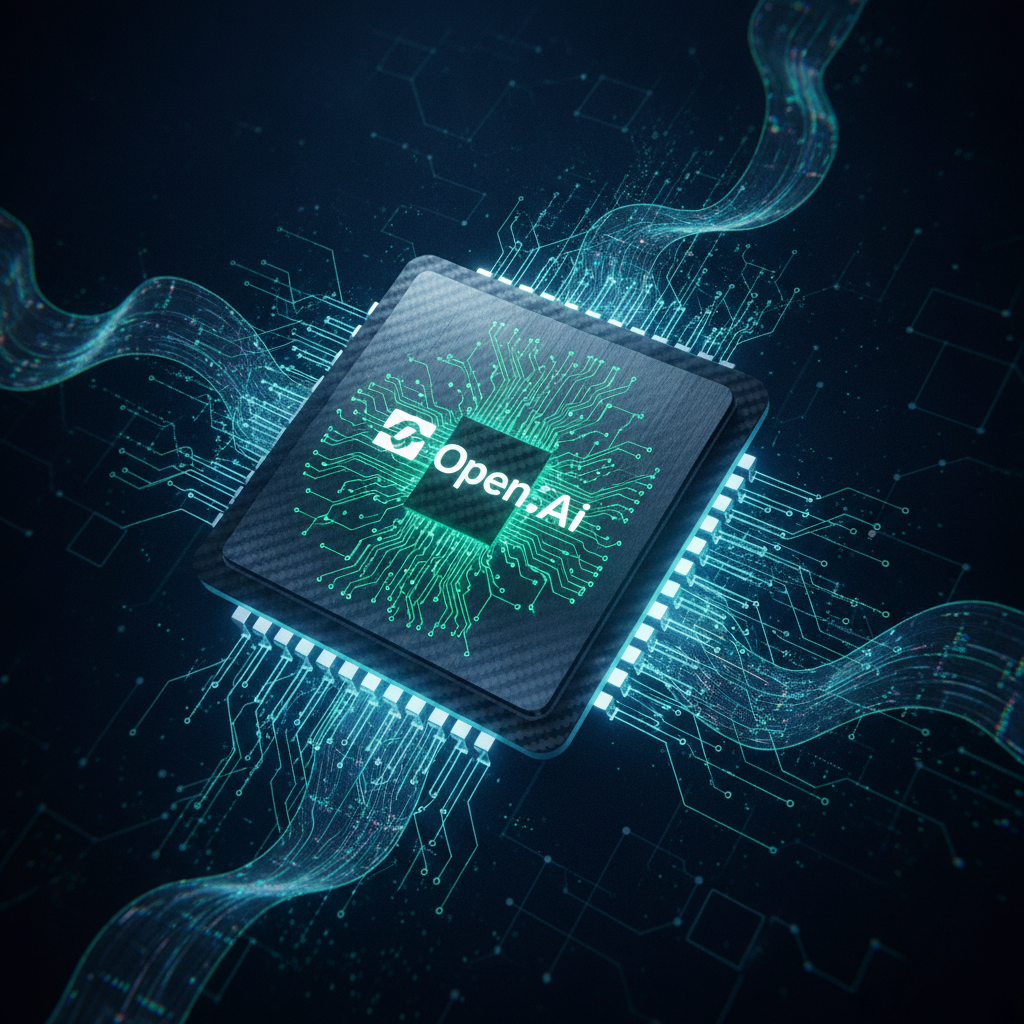
The AI Arms Race Just Got Hotter: OpenAI Unveils Custom 'Jalapeño' Chip
The artificial intelligence landscape is evolving at breakneck speed, with breakthroughs appearing almost daily across software, models, and policy. Yet, beneath the surface of dazzling new capabilities, a silent but fierce battle is raging: the race for superior AI hardware. This month, a significant development sent ripples through the industry, signaling a strategic shift for one of AI's leading pioneers. OpenAI, in collaboration with Broadcom, has officially unveiled its first custom-designed AI inference chip, codenamed 'Jalapeño'. This move isn't just about faster processing; it's a bold declaration of intent to redefine the economics and scalability of artificial intelligence.
The 'Jalapeño' chip, formally announced on June 24, 2026, is purpose-built for Large Language Model (LLM) inference – the process of running trained AI models to generate responses or perform tasks. This is distinct from training, which involves teaching the models in the first place. Engineering samples were personally delivered to OpenAI CEO Sam Altman and President Greg Brockman, marking a pivotal moment for both companies. What makes 'Jalapeño' particularly newsworthy are its reported performance metrics: early lab testing suggests it can achieve approximately 50% lower inference cost per token compared to current-generation Nvidia GPUs, while matching the performance of powerhouses like Nvidia Blackwell and Google TPUs. Furthermore, OpenAI and Broadcom claim an astonishing nine-month design-to-tape-out cycle, hailed as the fastest ever for an advanced high-performance chip, with OpenAI's own AI models even assisting in parts of the design process.
This foray into custom silicon is a strategic imperative for OpenAI. As LLMs become more complex and their usage explodes across various applications—from enhancing search engines to powering intelligent assistants like Apple's newly revamped Siri AI (now powered by Google's Gemini models)—the cost and energy consumption of inference become critical bottlenecks. By developing its own chip, OpenAI aims to gain greater control over its infrastructure, reduce its dependency on third-party hardware providers, and ultimately drive down the operational expenses associated with running its advanced models at scale. This vertical integration could accelerate the deployment of more sophisticated AI applications, making them more accessible and economical for a broader range of users and enterprises.
The 'Jalapeño' unveiling is also a powerful indicator of the broader AI hardware race currently underway. Giants like Nvidia continue to push the boundaries with new offerings such as RTX Spark, a superchip co-developed with Microsoft, designed to bring AI agent workloads directly to PCs. Microsoft itself is launching a family of in-house MAI models, further diversifying the hardware ecosystem. Meanwhile, nations like South Korea are committing massive investments to secure leadership in AI chip development, recognizing the strategic importance of this foundational technology. This intense competition promises to fuel rapid innovation, pushing the boundaries of what's possible in AI and making computational power more efficient and ubiquitous than ever before.
The implications of OpenAI's custom chip are far-reaching. Cheaper and more efficient inference could democratize access to advanced AI capabilities, fostering innovation across industries without the prohibitive computational costs previously associated with large models. It highlights a future where AI companies not only lead in model development but also actively engineer the very silicon that brings those models to life. As AI continues to embed itself as the foundation beneath our digital experiences, innovations like 'Jalapeño' are critical steps toward a future where powerful, intelligent systems are not just theoretical, but practical, affordable, and pervasive.
Sources & References
- AI Insights: Key Global Developments in June 2026 - RiskInfo.ai
- Biggest AI Developments June 2026 — Essential Breakthroughs - AI Foresight 360
- AI News Today June 26 2026: 15 Biggest Stories
- Apple introduces Siri AI, a profoundly more capable and personal assistant
- South Korea unveils massive AI-chip drive | East Asia Tonight 29 June 2026 - YouTube
Discussion (0)
Add a Comment